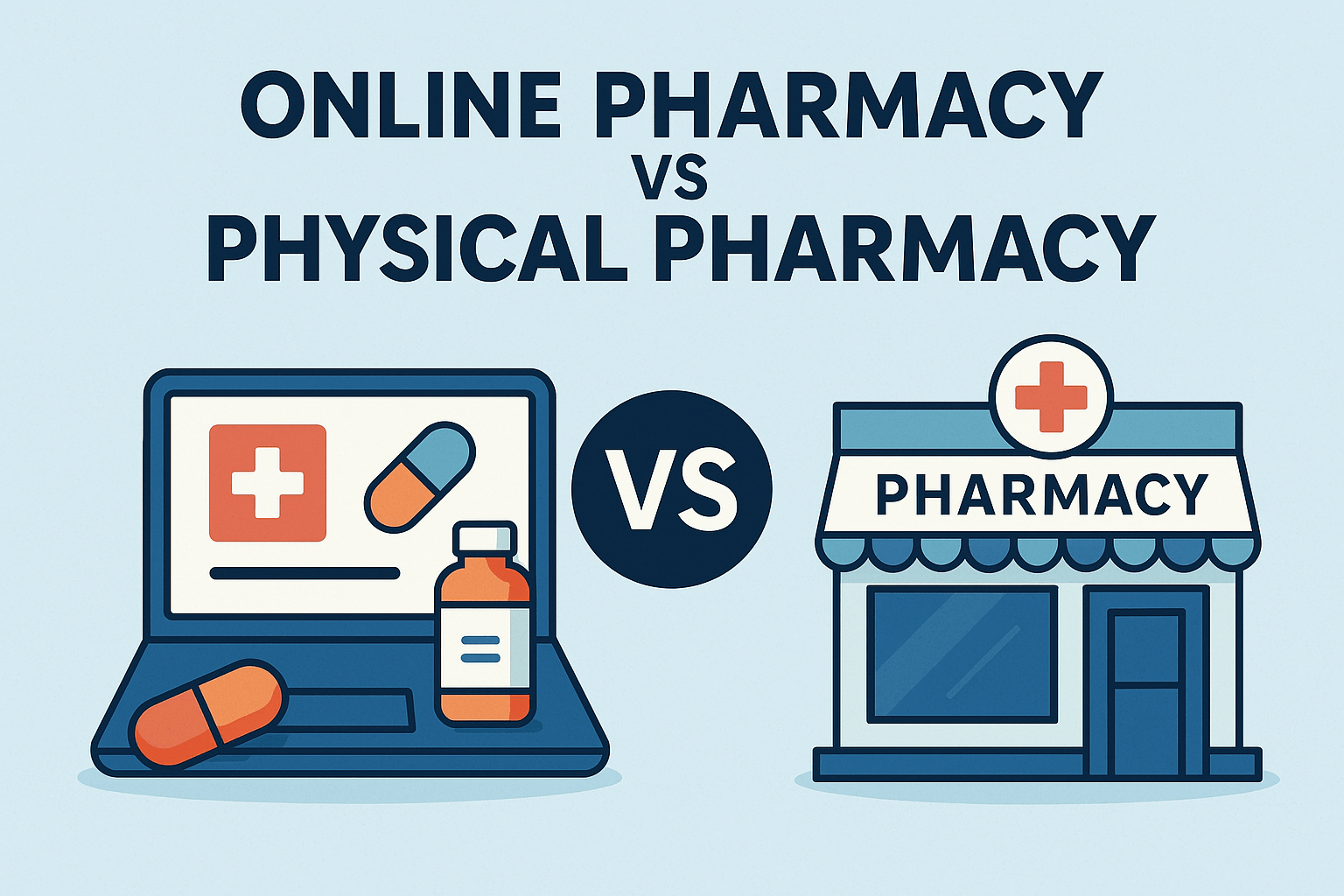
In the world of healthcare which is ever evolving, technology is reshaping how we access medical services, especially in the area of pharmaceutical care. The traditional physical pharmacy, once the cornerstone of community healthcare, is now being challenged by the rise of online pharmacies. But what exactly distinguishes these two models, and why are online pharmacies thriving in today’s digital ecosystem? Let’s take a deep dive.
WHAT IS A PHYSICAL PHARMACY?
A physical (or community) pharmacy is a conventional brick-and-mortar store where pharmacists dispense medications, offer consultations, and sell health products. These pharmacies are usually located in towns, cities, or within hospital environments and are staffed by licensed pharmacists and pharmacy technicians.

Core Services:
Dispensing prescription and over-the-counter drugs
Medication counseling and patient education
Basic health screenings (e.g., blood pressure, glucose checks)
Immunization services
Emergency drug supply
WHAT IS AN ONLINE PHARMACY?
An online pharmacy, also known as an e-pharmacy, operates digitally—often through a website or mobile app. It allows patients to order prescription and non-prescription drugs from the comfort of their homes, which are then delivered directly to their doorstep.

Core Services:
Digital drug ordering and doorstep delivery
E-prescription validation and tracking
Online consultation and remote pharmacist advice
Automated refill reminders
Health blogs, patient education, and product reviews
ADVANTAGES AND DISADVANTAGES OF EACH MODEL


PHYSICAL PHARMACY
Advantages:
Personal Interaction: Face-to-face consultations with a licensed pharmacist build trust and rapport.
Immediate Access: You can obtain medications instantly without waiting for delivery.
Emergency Readiness: Useful during urgent or emergency drug needs.
In-Store Services: Access to point-of-care services like vaccinations and health checks.
Disadvantages:
Limited Accessibility: Rural or underserved areas may have poor access to pharmacy outlets.
Time and Mobility Constraints: Patients may struggle with visiting, especially the elderly or disabled.
Restricted Operating Hours: Most physical pharmacies do not run 24/7.
Overhead Costs: High rent, utility bills, and staff wages reduce profitability.
ONLINE PHARMACY

Advantages:
Convenience: Order from anywhere, anytime—ideal for busy professionals or chronically ill patients.
Wider Reach: Serves remote or underserved communities that may lack local pharmacies.
Cost-Effective: Lower operational costs often translate into cheaper drug prices for consumers.
Digital Integration: Seamless use of apps, AI-based consultations, and e-prescriptions improve the patient experience.
Discreet Purchases: Ideal for sensitive medications (e.g., sexual health, mental health treatments).
Disadvantages:
Delayed Access: Waiting periods for drug delivery may affect urgent medication needs.
Trust and Regulation Issues: Risk of counterfeit drugs from unverified platforms.
Limited Physical Services: No physical examinations, vaccinations, or urgent care.
Technology Barriers: Not all users (especially the elderly) are tech-savvy.
WHY ONLINE PHARMACIES THRIVE BETTER IN THE DIGITAL AGE
1. Digital Convenience Meets Consumer Demand
In a fast-paced world, consumers prioritize convenience. Online pharmacies eliminate the need for physical movement and long queues. With just a few clicks, patients receive their medications—saving time and stress.
2. Post-COVID Healthcare Shift
The COVID-19 pandemic accelerated the adoption of telemedicine and remote healthcare solutions. E-pharmacies fit perfectly into this new ecosystem, becoming the default for many patients during lockdowns—and beyond.
3. Younger Demographic, Digital Expectations
Millennials and Gen Z—now key healthcare consumers—prefer digital-first services. These tech-savvy users are more likely to consult with chatbots, order medications online, and leave digital reviews than step into a physical store.
4. Lower Operating Costs and Higher Scalability
Unlike physical pharmacies burdened with overhead expenses, online pharmacies operate with minimal infrastructure. This allows them to scale faster, serve wider geographies, and offer competitive prices.
5. Data-Driven Personalization
Online platforms use data analytics to personalize recommendations, track medication adherence, and send intelligent refill reminders. This level of engagement is difficult to replicate in physical settings.
THE FUTURE: Hybrid is the Answer?
While online pharmacies are thriving, the complete extinction of physical pharmacies may not be realistic—or advisable. Physical pharmacies offer vital community touchpoints for emergency medications, vaccinations, and health screenings. The future may lie in hybrid pharmacy models, where physical outlets integrate online services to offer the best of both worlds.
Conclusion: Embrace the Shift, Prepare for the Future
The battle between online and physical pharmacies isn’t just about convenience vs tradition—it’s a reflection of how healthcare is evolving. Online pharmacies thrive because they align with the digital economy, solve logistical problems, and offer tailored healthcare experiences. However, the physical pharmacy still holds ground with its personal touch and immediate access.
As a patient, pharmacist, or entrepreneur, understanding this shift isn’t optional—it’s essential. The pharmacy of the future is connected, data-driven, and patient-centric. And it’s already here.
Want to stay ahead of the curve?
Join our Telegram Channel – Digital Pharmacists Hub, where we share free updates on online pharmacy innovations, tech trends in healthcare, AI tools for pharmacists, and step-by-step guides on how to thrive in the evolving pharmaceutical space.
Click here to join: https://t.me/+FFTw7OA0mFU0OWRk
Be part of a growing community shaping the future of pharmacy, one digital skill at a time.


























 First Leader Pharmacist