INTRODUCTION
The world is changing rapidly, and healthcare is not left behind. From telemedicine to AI-assisted diagnoses, technology is reshaping how we access and deliver health services. One key evolution is Digital Pharmacy—a transformative approach that blends pharmaceutical care with technology to improve patient outcomes, enhance access, and revolutionize the role of the pharmacist. But what exactly is digital pharmacy, and why should every pharmacist take it seriously?
What Is Digital Pharmacy?
Digital pharmacy refers to the integration of digital technologies into pharmacy practice to deliver services such as:
Online prescriptions and consultations
E-prescribing and electronic medical records (EMRs)
Medication management and adherence tracking via apps
Telepharmacy and remote counselling
AI-powered drug interaction tools and inventory systems
It enables pharmacies to reach more patients, reduce medication errors, improve workflow efficiency, and ultimately enhance patient care.
Who Is a Digital Pharmacist?

A Digital Pharmacist is a licensed pharmacist who leverages technology to offer pharmaceutical care in a virtual or tech-enabled environment. Beyond dispensing drugs, they are tech-savvy professionals trained in areas such as:
Health tech tools and digital platforms
Electronic Health Records (EHRs)
Online patient communication
Data analytics and AI tools
E-commerce and logistics for online medication delivery
Digital pharmacists are at the forefront of innovation—connecting, educating, and serving patients across digital channels.
What Does It Take to Become a Digital Pharmacist?
To step into this role, pharmacists need to gain:
1. Digital Literacy: Basic IT skills, familiarity with healthcare software, apps, and telecommunication tools.
2. Online Patient Engagement Skills: Communicating effectively through video consultations, chats, or email.
3. Training in Digital Health Tools: Courses or certifications in telepharmacy, health informatics, or e-health systems.
4. Entrepreneurial Skills: For those looking to start an e-pharmacy, skills in digital marketing, branding, and e-commerce are key.
5. Compliance Knowledge: Understanding of local digital health regulations, data privacy laws, and pharmaceutical ethics.
What Do Digital Pharmacists Do?
Digital pharmacists are involved in:
Telepharmacy Services: Conducting remote medication counselling and therapy management.
E-Pharmacy Management: Operating or working for online drugstores that handle digital prescriptions and home deliveries.
Digital Patient Education: Using blogs, videos, webinars, or social media to provide medication information and health tips.
Pharmacy Tech Development: Contributing to or consulting on the development of pharmacy software and digital tools.
Data-Driven Decisions: Using analytics to track medication use patterns, improve adherence, and provide personalized care.
Trends in Digital Pharmacy to Watch

1. AI-Powered Drug Management – Tools that help flag drug interactions, automate refills, or personalize medication advice.
2. Blockchain for Drug Traceability – Enhancing supply chain integrity and reducing counterfeit drugs.
3. Wearable-Linked Medication Alerts – Integrating smartwatches with pharmacy systems for real-time adherence tracking.
4. EHR Integration – Seamless sharing of patient data across healthcare providers and pharmacists.
5. Pharmacy Chatbots – 24/7 support systems for patient inquiries and prescription renewals.
WHAT MAKES DIGITAL PHARMACY MORE PROFITABLE THAN TRADITIONAL PHARMACY?
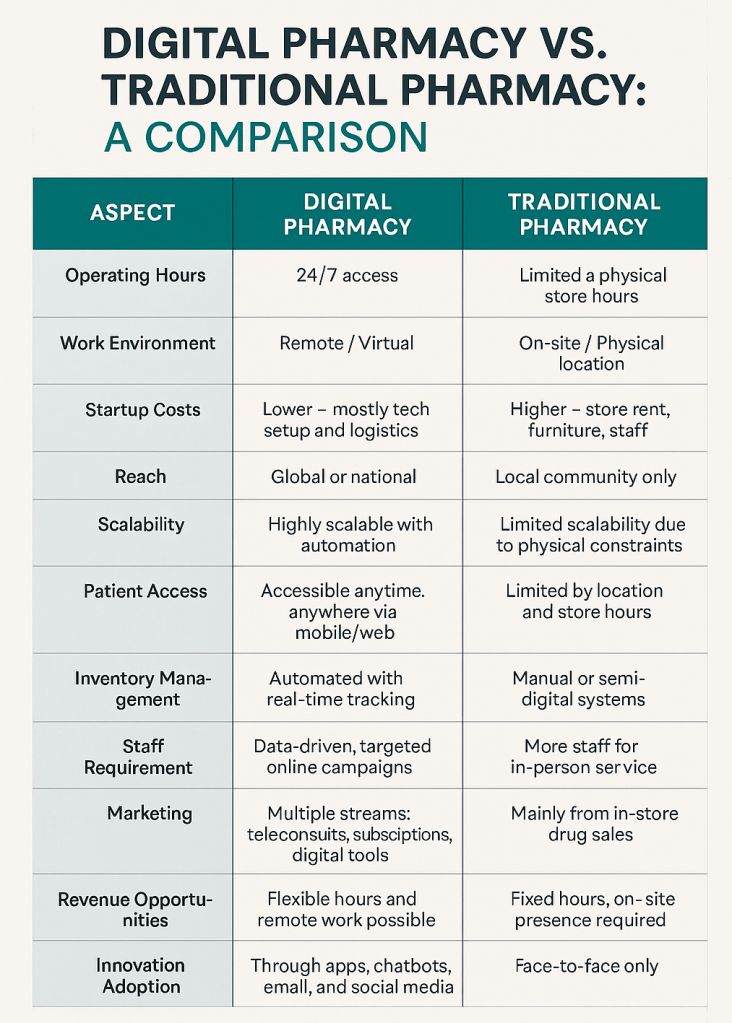
Digital pharmacy can be more profitable than traditional pharmacy in several ways, primarily because it reduces overhead, expands market reach, and leverages automation. Here’s a breakdown:
1. Lower Operating Costs
No need for expensive retail space – E-pharmacies can operate with minimal physical infrastructure.
Fewer staff required – Digital systems automate many tasks like inventory, refills, and customer support via chatbots.
Reduced utility and maintenance expenses.
2. Wider Market Reach
A digital pharmacy isn’t limited to a single location — it can serve customers across cities or even countries.
More patients = more sales, especially in underserved areas where pharmacies are scarce.
3. 24/7 Availability
Unlike brick-and-mortar stores, digital pharmacies can operate round-the-clock.
This creates more opportunities for sales and customer engagement.
4. Scalable Business Model
Once the system is set up (e.g., e-commerce, logistics, prescription management), scaling to serve more customers requires minimal additional cost.
Automation allows handling hundreds of prescriptions with limited human input.
5. Additional Revenue Streams
Teleconsultation services with pharmacists or doctors.
Health tech products like adherence apps, wearable integration, or health kits.
Affiliate partnerships with labs, insurance firms, or supplement brands.
Subscription models for chronic patients who need monthly medications.
6. Data-Driven Marketing
Digital platforms collect user behavior data, enabling targeted promotions and personalized offers—something physical stores can’t do efficiently.
This boosts retention and repeat purchases.
7. Inventory Optimization
With real-time inventory tracking and predictive analytics, digital pharmacies reduce stockouts and overstocking.
Efficient inventory = higher profit margins.
8. Improved Work-Life Balance for Pharmacists
Flexible Work Schedules: Digital pharmacists can offer consultations, manage prescriptions, and run operations remotely—no more 12-hour shifts behind the counter.
Remote Work Opportunities: Work from home or anywhere with internet access, allowing for better time management and less burnout.
Automated Workflows: Digital systems reduce repetitive manual tasks, giving pharmacists more time to focus on strategic and meaningful work.
Better Mental Health: A balanced routine, reduced physical strain, and increased autonomy lead to improved overall well-being and job satisfaction.
In summary: Digital pharmacy is more profitable because it’s leaner, smarter, and more customer-centric. It combines healthcare with tech and business intelligence—an unbeatable formula for modern success.
Conclusion: Why Now Is the Time
The pharmacy profession is at a turning point. Digital pharmacy is not a future idea—it is happening now. Whether you’re a community pharmacist, hospital pharmacist, or aspiring healthcare entrepreneur, embracing digital tools will not only future-proof your career but also expand your impact. It’s time for pharmacists to move from the counter to the cloud.
Call to Action:
Start your journey today. Enroll in a digital health course, explore telepharmacy platforms, or join a community of forward-thinking pharmacists. The digital pharmacy era is here—don’t be left behind.
Are you a forward-thinking pharmacist ready to embrace the digital future of healthcare?
Stay updated on tech trends, online pharmacy innovations, digital tools, and training opportunities tailored for pharmacists.

Join our Digital Pharmacists Hub on Telegram – it’s FREE!
Connect, learn, and grow with a community of passionate digital-minded pharmacists.
[Click here to join now] DIGITAL PHARMACISTS HUB
Let’s shape the future of pharmacy together!

 First Leader Pharmacist